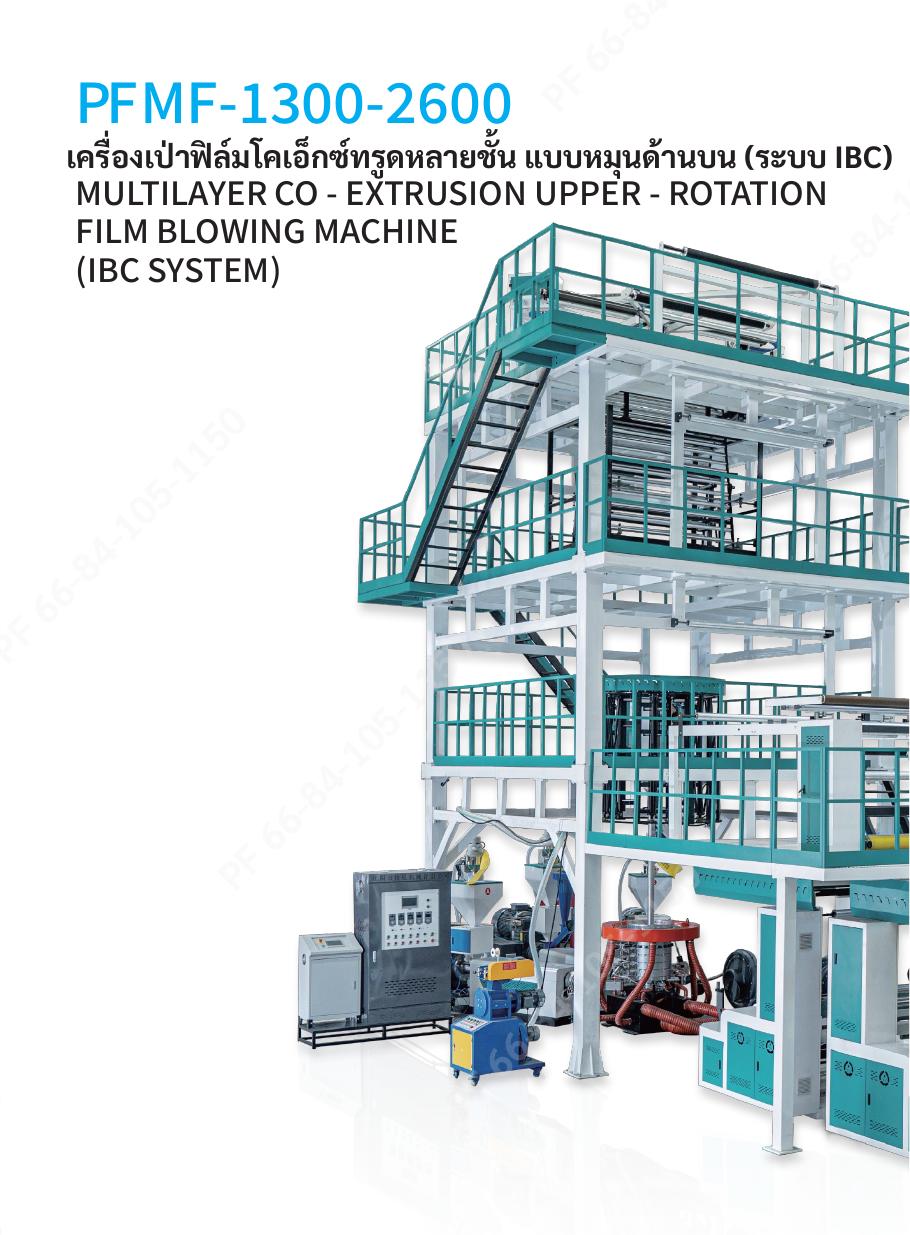
PFMF-1300-2600
View machine details →3–5 Layers Co-Extrusion Film Blowing Machine (Rotary Take-Up + IBC)
Rotary Take-Up + IBC; 3–5 layers · 200–580 kg/h
FILM PRODUCTION & COST OPTIMIZATION
Film blowing machinery and packaging production solutions configured around your materials, application, production capacity and cost targets.
START WITH ECONOMICS
Select technology and configuration from application, resin, width, gauge, output, scrap and cost per kg so the investment fits the real operation.
APPLICATION-FIRST SOLUTIONS
MACHINE CONFIGURATIONS
Rotary Take-Up + IBC; 3–5 layers · 200–580 kg/h
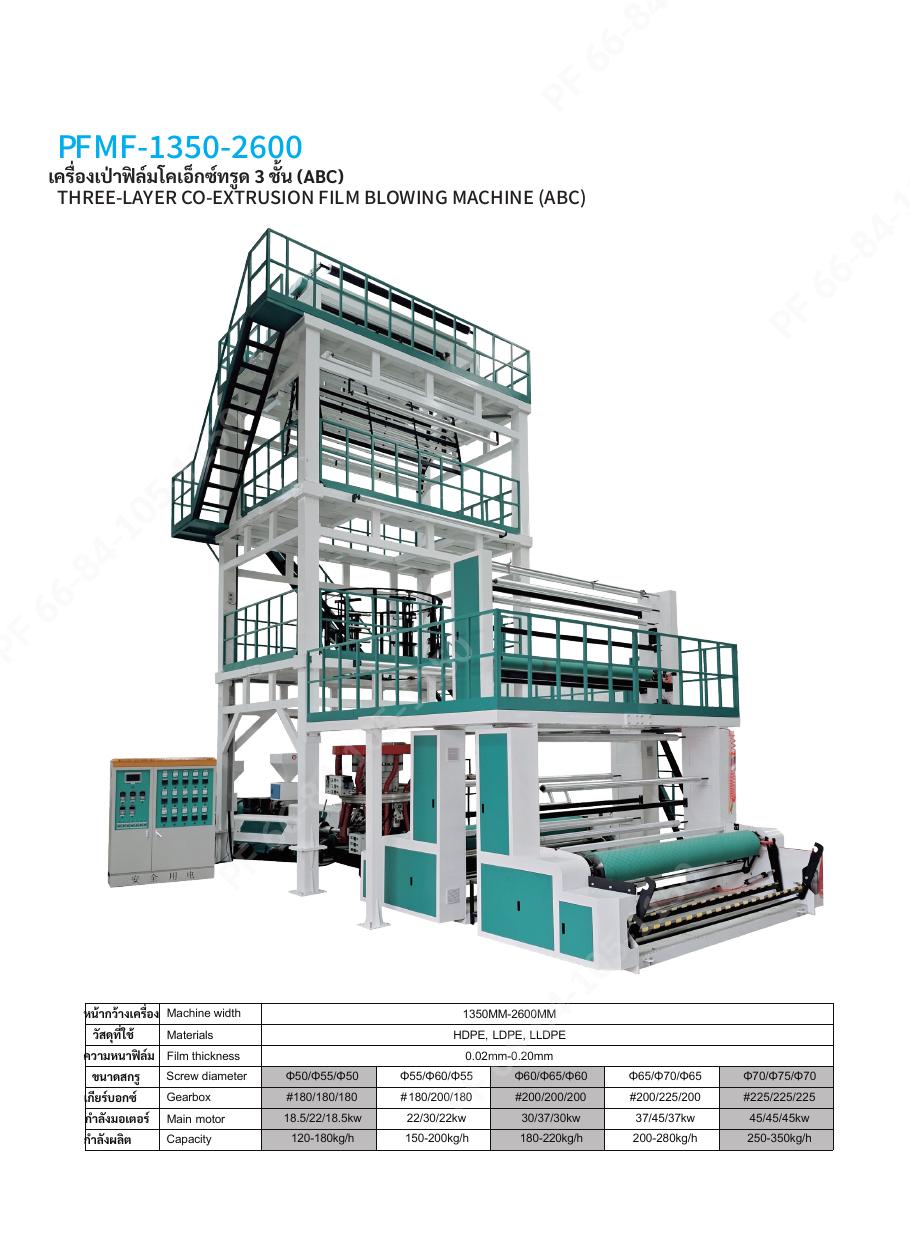
ABC three-layer co-extrusion · 120–180; 150–200; 180–220; 200–280; 250–350 kg/h
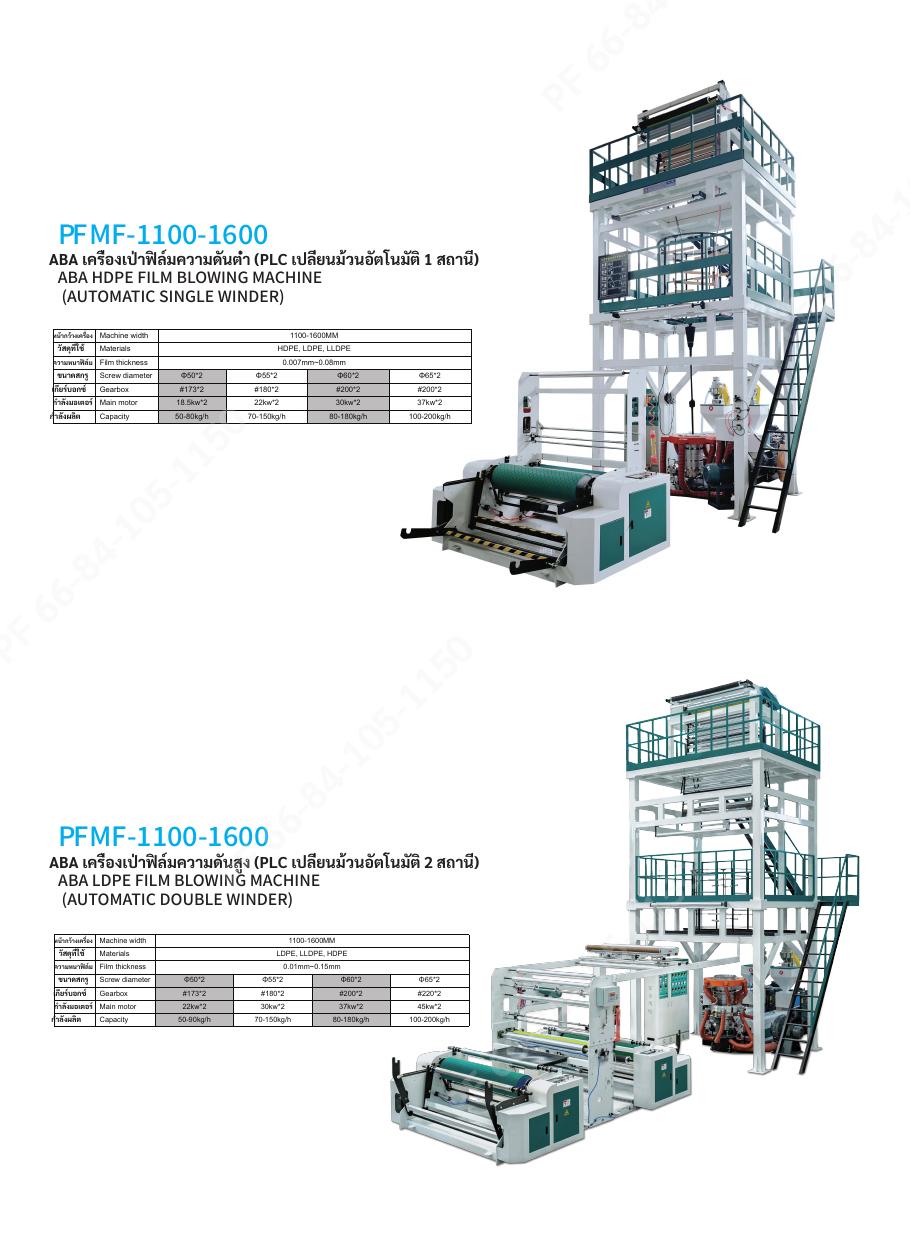
ABA; automatic single winder · 50–80; 70–150; 80–180; 100–200 kg/h
ABA; automatic double winder · 50–90; 70–150; 80–180; 100–200 kg/h
Single layer; inline printing · 20–40; 30–50; 30–70; 40–80; 50–100 kg/h
Single layer; manual single-position winder · 20–40; 30–50; 30–70; 40–80; 50–100 kg/h
DECISION TOOLS
KNOWLEDGE FOR INVESTMENT
TECHNICAL GUIDE
A blown film line turns resin pellets into tubular film through melting, die extrusion, bubble inflation, cooling, collapsing and winding. Correct selection starts with the product and production numbers—not a model name.
Read guide →TECHNICAL GUIDE
The useful question is not whether ABA is better than Single Layer, but how much layer and formulation flexibility the application requires.
Read guide →TECHNICAL GUIDE
ABA and ABC are both three-layer structures, but they differ in extruder arrangement and formulation freedom. Selection should follow the product requirement, not an assumption that more complexity is always better.
Read guide →WHY PF MACHINE
Define the real product and process
Connect output, scrap and cost
Compare configurations methodically
From proposal to commissioning
Coordinate scope-based specialists
PF Machine works with selected manufacturing partners to configure machinery according to each project’s production requirements.